
The alarm went off at 3am, it was still pitch black outside, and time to get ready for a really important day, when we finally try to reach the summit of Mount Fuji. We had chosen the Subashiri trail for our ascent, which is one of the least popular trails with only 8% of climbers each year, and is the second lowest starting elevation of the four trails, starting at 2000m (6650 feet). During the summer season, you cannot drive a private car up to the trailhead at the fifth station but need to either take a bus or taxi up. Rather than taking a long bus from Gotemba to reach the start of the trail, we drove to a “my car” parking lot and caught a shuttle bus. We almost missed the first shuttle bus of the morning, the internet said the first bus was at 6am, but was actually leaving the mar car lot at 5:45! The day wasn’t off to the best start as it was already drizzling, but with waterproofs and gators on we made our way up to the Subashiri fifth station.

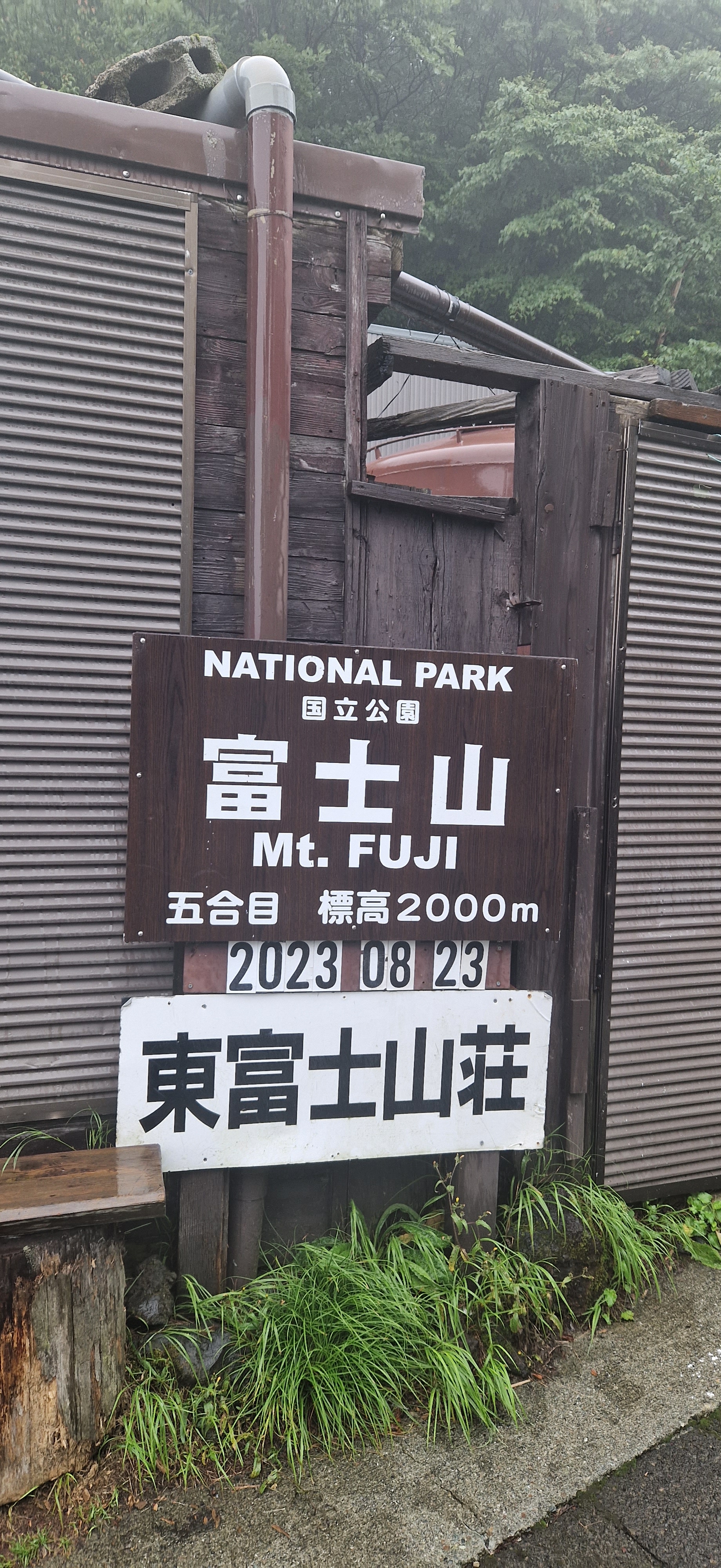
It is advised that to combat altitude sickness you should stay at the fifth station for an hour to acclimatise. We had planned to stay on the benches outside, but at 2000m it was tipping it down so we went into the shop. As with many family-run shops they greeted us with hot cups of tea and invited us to sit down and take our heavy bags off of our backs. The shop was full of Fuji-related treasure and while waiting for the rain to stop my husband purchased the classic wooden climbing pole for our ascent.
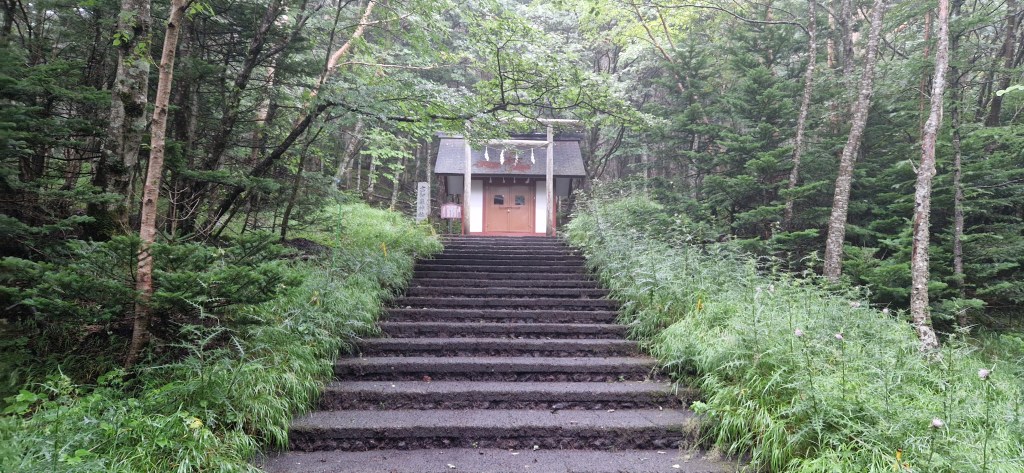
The first stop on the trail is Komitake Shrine where you can pray for a safe climb. As it was so early in the day the shrine hadn’t yet been opened. Once past the shrine you will come to the 2,000m marker, showing you *only* have 1,776m left to go! The trek between the 5th and 6th stations is long on this trail, but goes through some lovely forest. You are mainly climbing on a trail made of hard lava, so the footing isn’t too bad in this section. As we walked we saw a number of volunteers picking litter off of the mountain, so sad that people don’t take their litter home with them. The volunteers were all working hard, even if the pouring rain.

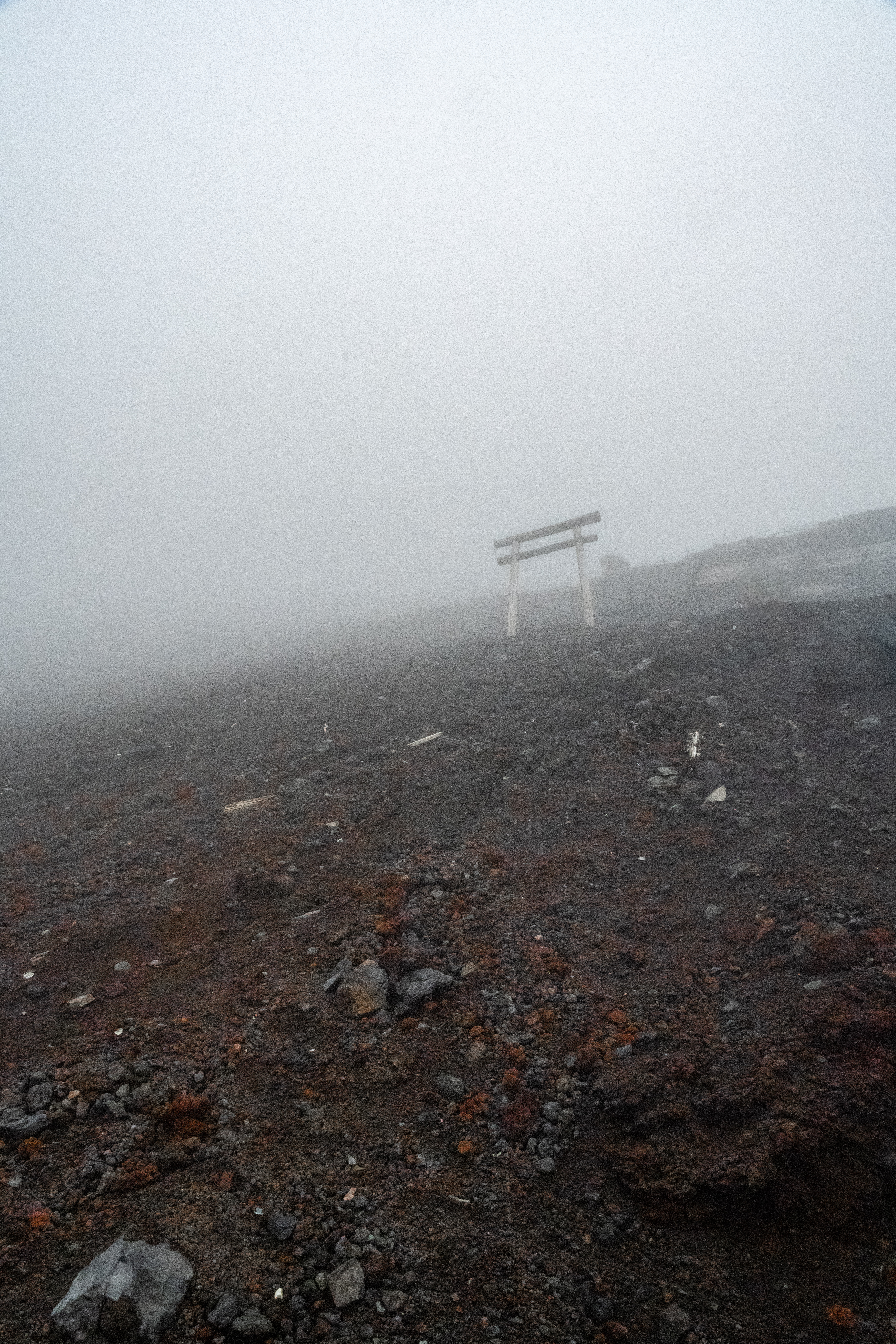
We eventually came to the 6th station, and the rain had only gotten worse, on the door of the hut it stated you could pay 1,000¥ per person for a 30 minute rest, and so we went in to get out of the weather. We were the only people in the station, and the owner wasn’t very chatty, so we just huggled down and hoped the rain would pass. The rain didn’t pass, but had become a little less torrential for us to set off from the sixth station.
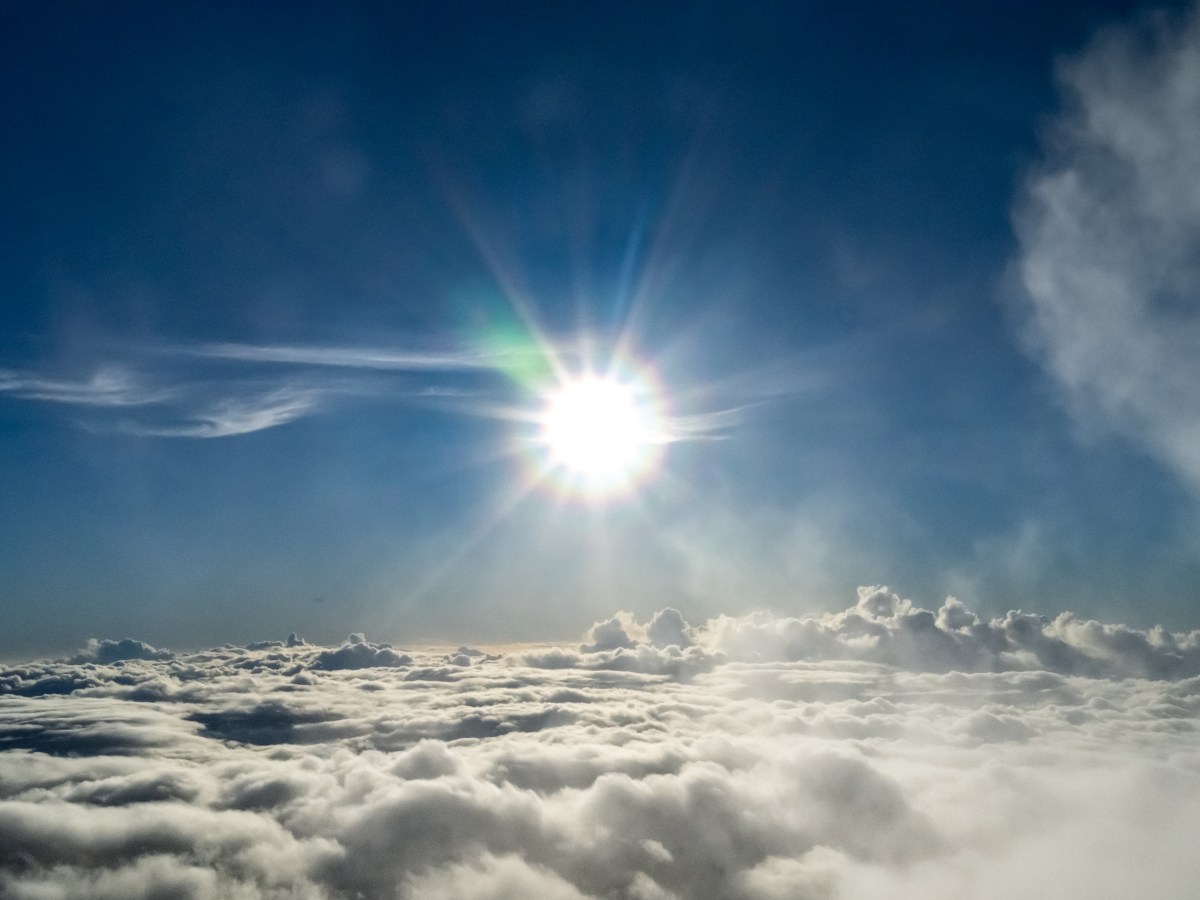
Even though the weather wasn’t ideal, it was quite cool to see the clouds rushing down the side of Mount Fuji, and so we soldiered on. As we reached the seventh station we found ourselves in a break in the clouds, and got the absolutely stunning view of Yamanakako from Fuji, the view I’d been waiting for! We had an early lunch at the seventh station and enjoyed the break from the persistent rain.


Either thanks to the weather, or the unpopularity of the trail, we saw very few people on our way up the Subashiri trail. From the 8th station the Subashiri trail merges with the most popular hiking trails, the Yoshida trail. This is where it can become quite busy, more of a queue than a hike. It must have been thanks to the weather that the trail was still practically empty, even once we were joined with the Yoshida trail. Somewhere around the (multiple) 8th stations, the clouds rolled in again, and the temperature dropped. There is a staggering temperature difference between the base of Fuji and the summit, with summer temperatures around the Fuji lakes being up to 35°C, the summit is often below freezing, and was around -5°C the day we climbed. It was at this time that we had an outfit change, putting on thermal fleece layers underneath our waterproofs as the wind chill made the hike even colder.
Due to the poor weather we lost the view, and the last hour of the climb turned into a slog. It was only us and another pair of climbers on the last push to the summit, taking turns to shelter ourselves in crevaces to get out of the freezing winds. Eventually we did it, and summited on the easter side of the caldera, but we weren’t done for the day.

To responsibly climb Mount Fuji you should have a hut booked in advance, as bullet climbing (up and down in one go) is not advised. As this was the first year Japan had opened since the pandemic began, it was predicted to be a busy year on Fuji. Even though I was prepped on the day the huts released their bookings, by the time I was awake in the UK (8 hours behind Japan) the huts along the route were fully booked for our dates. The only hut with remaining availabilty was on the southern tip of the caldera, Chojo Fujikan. Lost in the mists we took a few wrong turns before finding the path that would take us to our accomodation, in a race against time as, even with a reservation, you cannot arrive after 6pm. We made it, and were given our skinny futon to rest on for the night. This is where things took a turn for the worse, and become one of the worst nights, but more about that in the next blog.

 My Nihon