
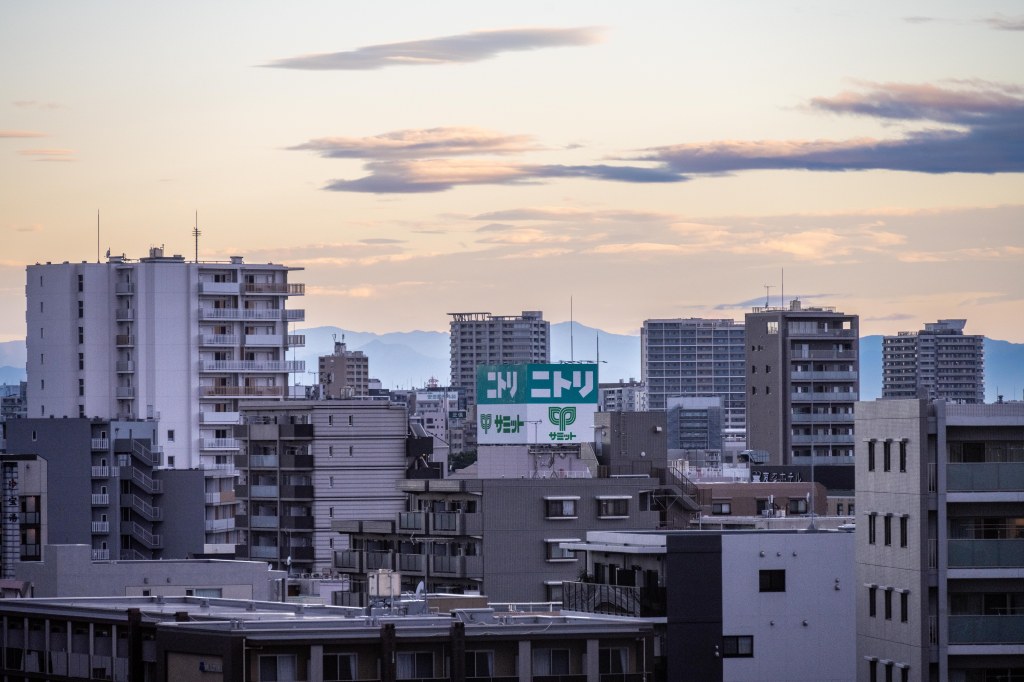
Thanks to our early night we woke up at 3am, we opened the curtains and the typhoon had passed, the sky was clear and before long the sun started to come up over the buildings. It is unusual in the summer to be able to see the mountains to the west, but we had a clear view. Sadly, a building blocked us from a clear view of Mount Fuji.
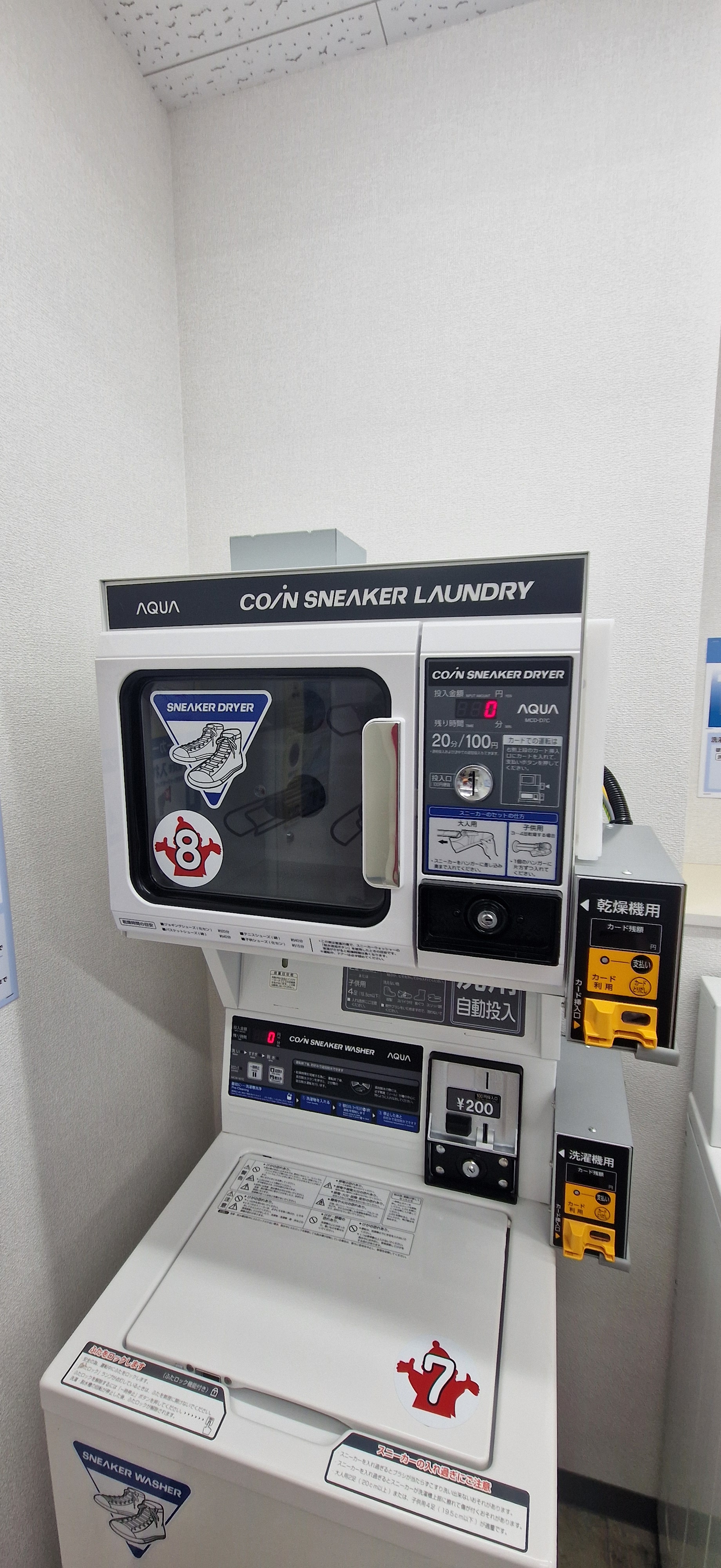
We had left out soggy shoes and clothes in the bathroom overnight with the extraction fan on. Even in the warm the coats and clothes hadn’t managed to dry. So, at 5am we were busy Googling nearby coin laundry so we can get everything dry and packed away. We found one Pierrot 627 Gohaginakamise Coin Laundry that was open 24/7 and so we headed out. My shoes had thankfully dried out, but my husband has a damp walk in the cool early morning weather. We were very lucky that this coin laundry had a shoe drier, so my husband could dry his shoes while our clothes dried as well.
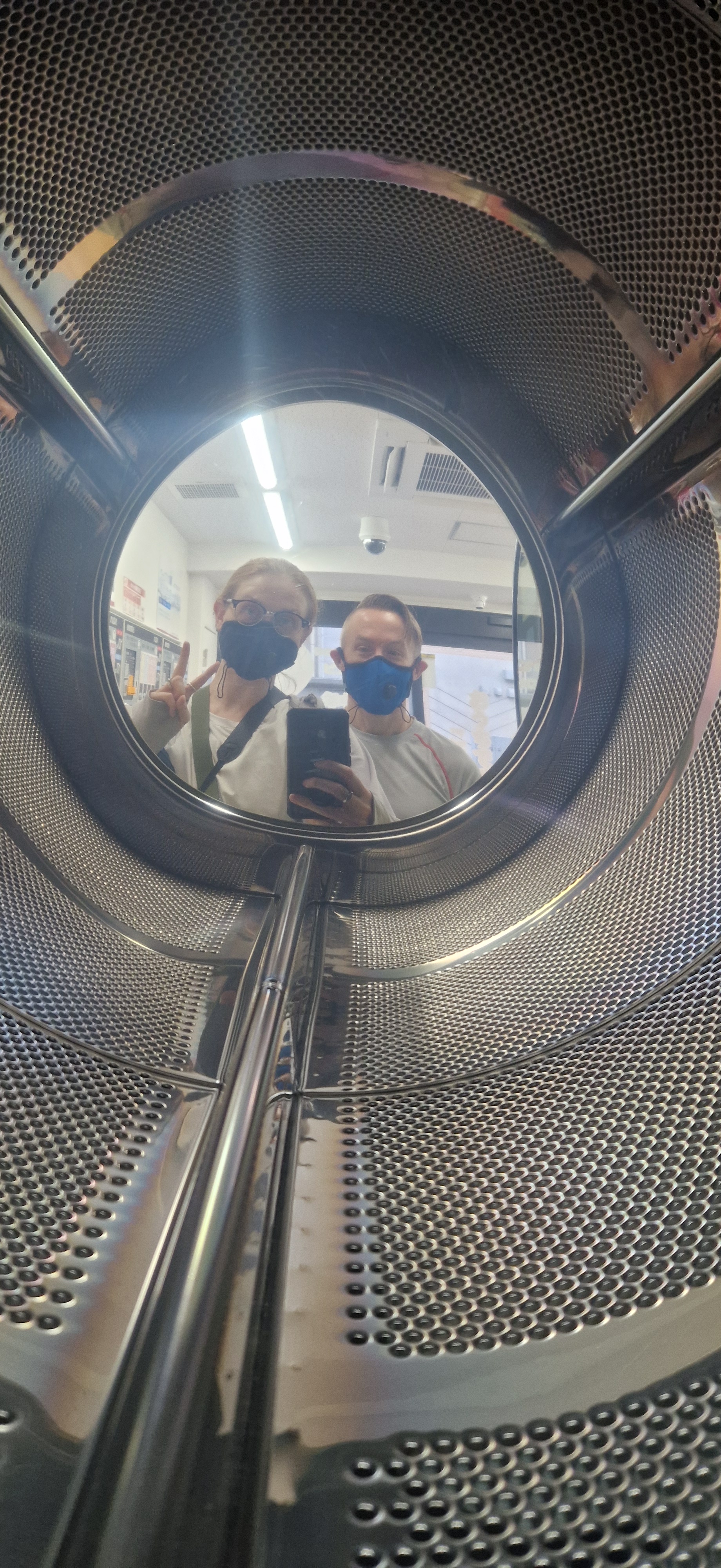
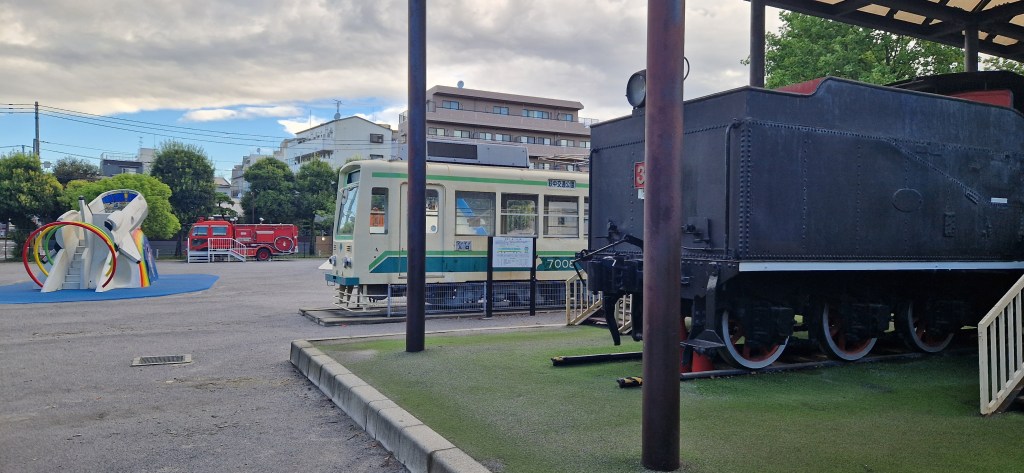
The driers were really quick, and 30-minutes later we were out of the coin laundry and decided to explore a park we could see across the street. The park is called Haginaka Park and was quite unusual and had an area filled with trains, fire trucks, and subway carriages. They were all open and people would be able to go in and explore, sadly, the park didn’t open until 9am and so we weren’t able to get in. Instead, we had a wander around and saw a group of older people engaging in rajio taiso – morning exercises announced on the radio. It is really enjoyable to watch, it would be super fun to join in one day too.
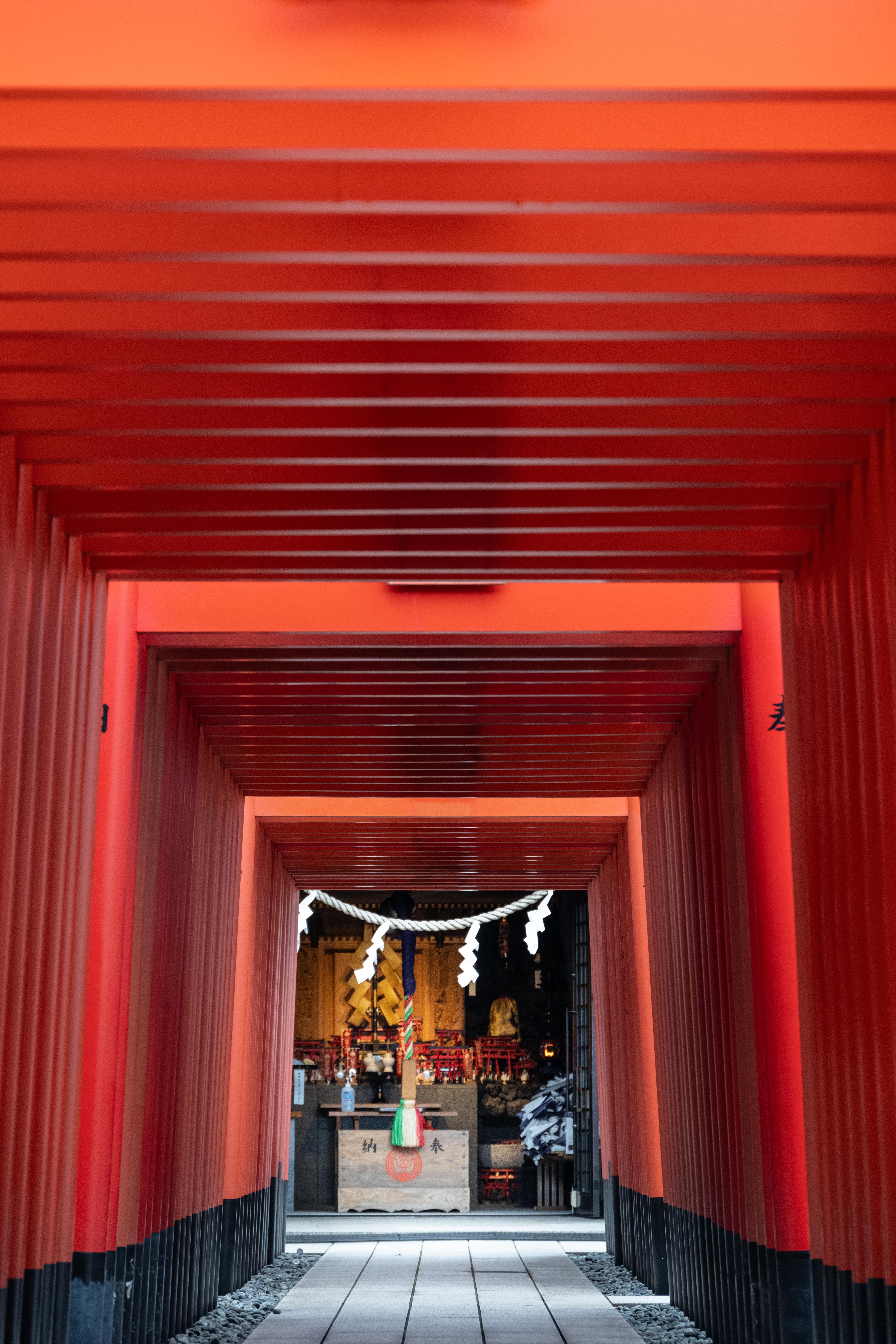
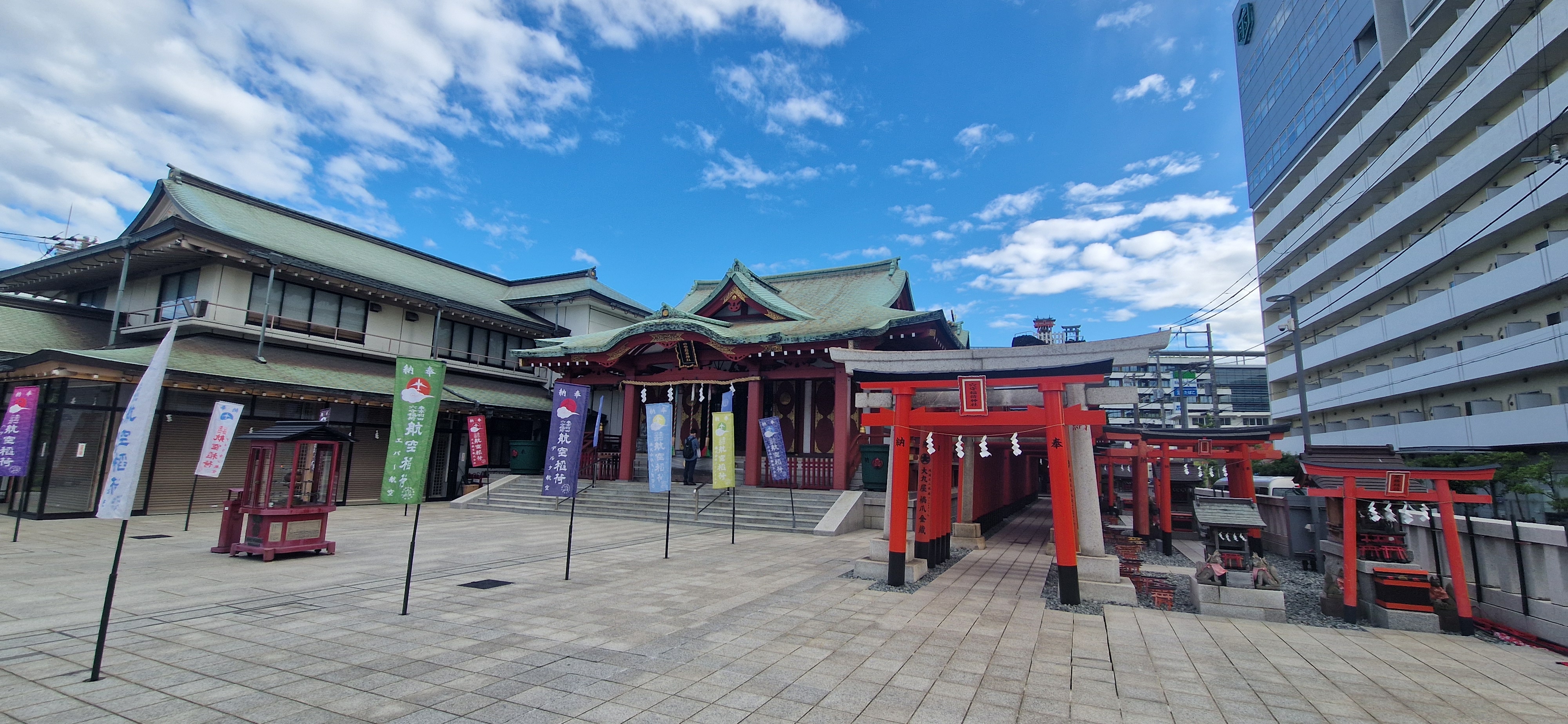
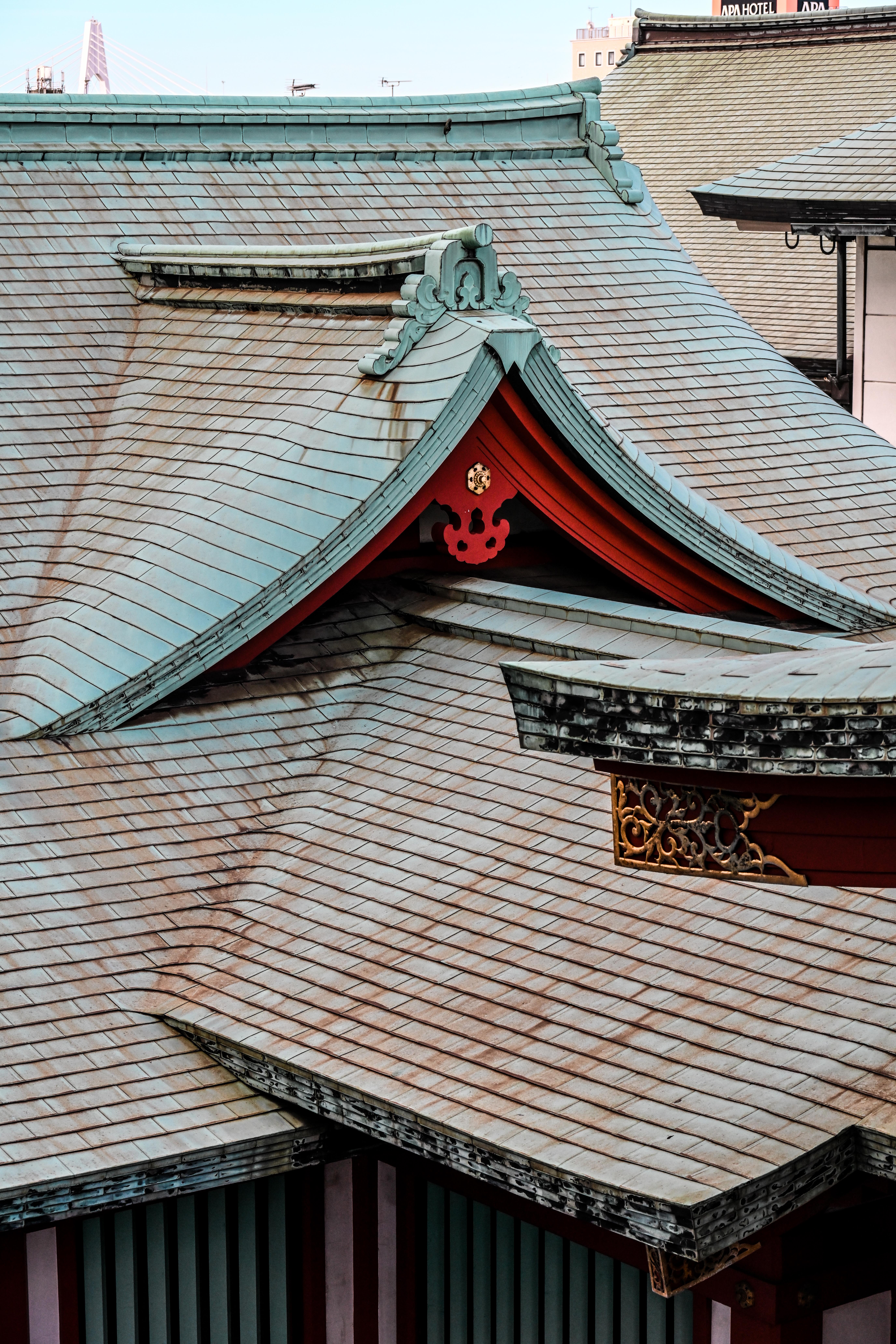
Our next stop was the Anamori Inari Shrine, which we have visited in our previous trips. It is an inari shrine, just like the famous torii shrine in Kyoto, with long lines on torii through the shrine. The shrine was moved down from the water front to it’s new location, there are a couple of nice shrine buildings, and a very interesting tower made of Mount Fuji lava rock that you can climb and get an over view of the area.
On our way back to the hotel and older lady on a bicycle stopped to have a conversation with me. She commiserated that Japanese is so hard to learn (don’t I know it!) and then shared that her friend was in England and she loved England. I always enjoy being able to use my Japanese, and especially in a rare Tokyo encounter. Once back to the hotel, we packed up, and just as the morning got to the peak of hotness, we started to drag out luggage down the road to the car hire office.
This time we were renting from Nippon Rent a Car, in the past we had used Toyota and Times. Toyota allows you to select the exact car model you want, for a fee, but this isn’t offered at other rentals. With Nippon you can choose a class of car, we had loved our Toyota Roomy so much in 2023 and we wanted that or similar, so we booked a Honda N-box or similar. We were hoping for a Roomy, as it was in the same class. Our first hurdle was the fact that we, and several others, had gone to the wrong office. The return office was noted on the forms, but we needed the collection office. After waiting for around 40 minutes, we got popped in a car and driven up to the correct office. Another drama ensued, even though I am purchased travel use on my card (I know, dumb UK cards) it wouldn’t work, for absolutely no reason. We tried other cars which didn’t work, and finally my husband’s card work. Finally, we got our car, an N-box!
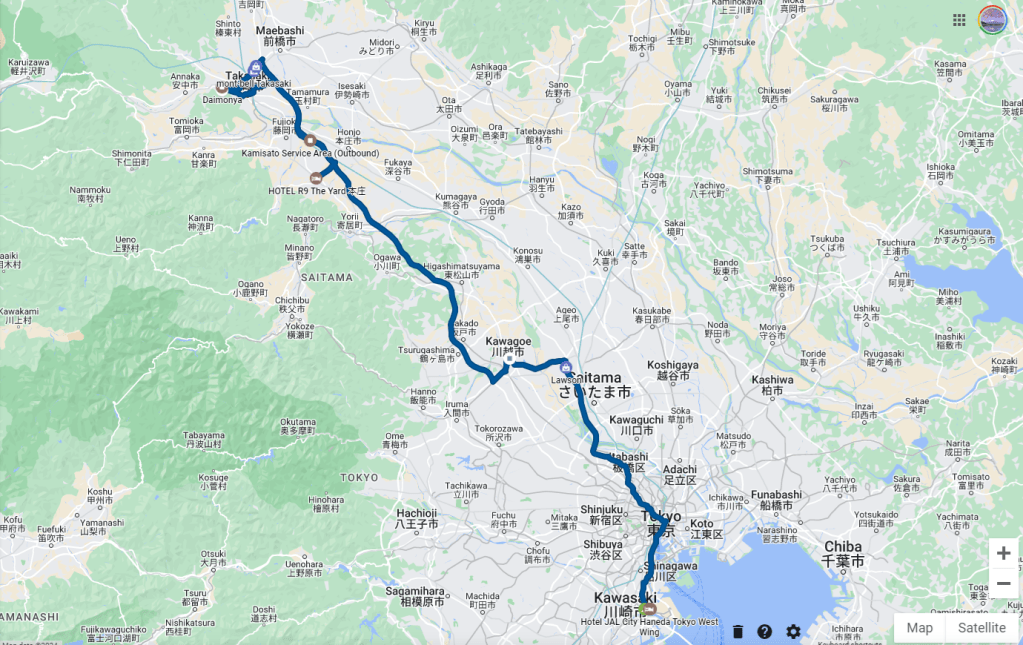
It took about an hour to get the car, so we were quite delayed getting on the road, we had over 100 miles to drive that day, and it was sweltering. Our first destination was in Kawagoe, a “little Kyoto” in Saitama north of Tokyo. Rather than just visiting the old town, we specifically wanted to visit the Kawagoe Enmusubi Furin Festival. I was a bit concerned that the furin would have been packed away for the typhoon, or that they may have been damaged. When we got to Kawagoe you would never know the day before had been so stormy, it was the hottest, stillest day I had ever seen. In was over 40°C in the sun, absolutely sweltering. Even with a sunshade and fan it was just so incredibly hot, but the beautiful blue sky made the furin look stunning.
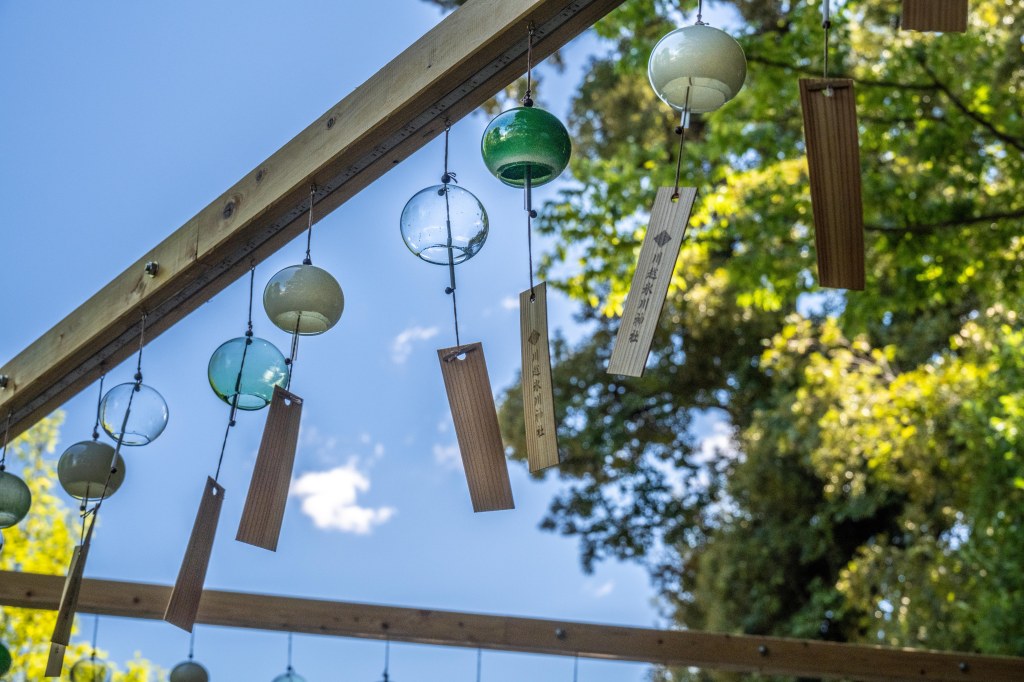
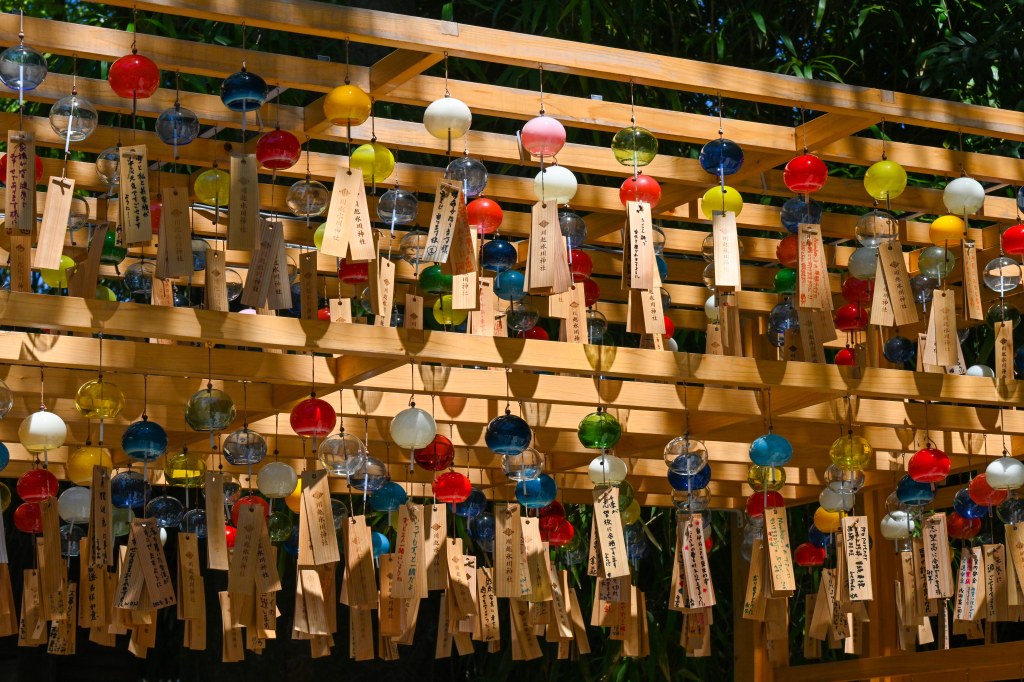
The shrine was set up with walking paths beneath hundreds of glass furin, it was a shame that it was such a still day as the tinkling of furin would have been lovely to experience (and the sound is meant to make you feel cooler too!). The shrine wasn’t too busy when walking through the furin paths, but the main building was quite packed. We got their famous goldfish omikuji and, not wanting to be in the heat much longer, headed back to the car. Originally, we had planned to walk the 20-minutes to the famous Edo-period building lined street, but couldn’t imagine walking there and back in the heat. Instead, we hopped into the (now absolutely roasting) car and drove through the bustling Edo streets.
My aim was not to see the street, but to visit the Kawagoe Kumano Shrine. The Kumano Kodo is a pilgrimage route through the Kii peninsula. The pilgrimage is over 1,000 years old and takes you through three grand shrines, usually with the aim of seeing Ise-jingu. However, the Kii Peninsula is far from Saitama and Kawagoe, yet there is a small shrine dedicated to the Kumano so far away. There were two reasons I wanted to visit, first as we are visiting the Kii Peninsula next year, and (perhaps more importantly) because the shrine is famous for their symbol the Yatagarasu – three legged crow who are said to help you achieve your goals (they got this reputation for saving a lost emperor back in the 700’s). I just think he is so cute, so I wanted to visit while I was in town to see him for myself. What I didn’t expect, is for there to be some absolutely adorable derpy versions of the crow throughout the shrine!
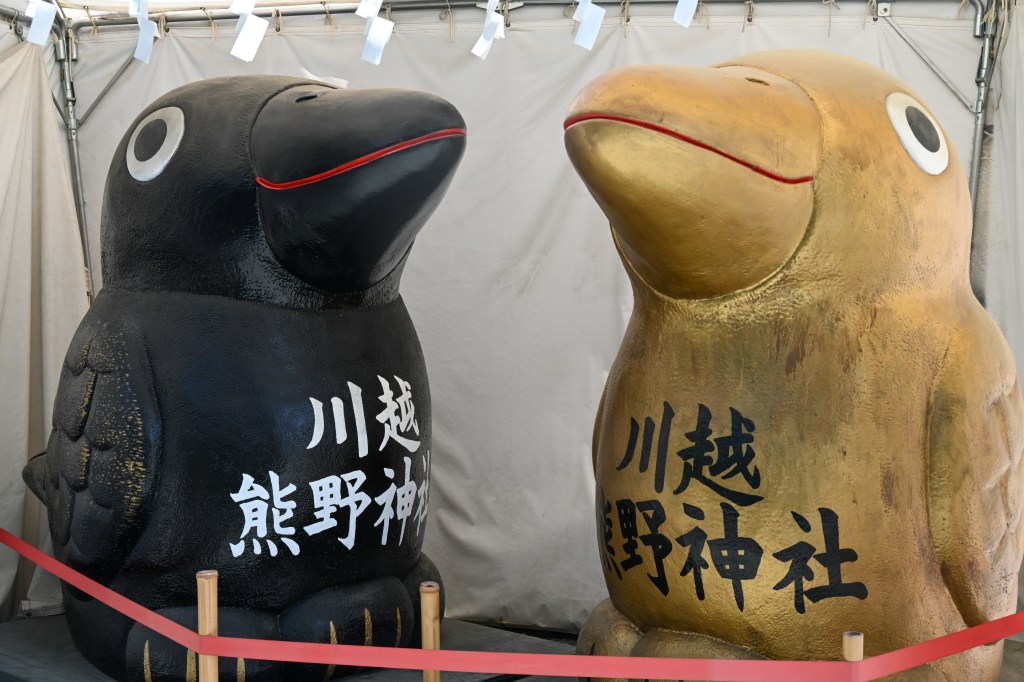
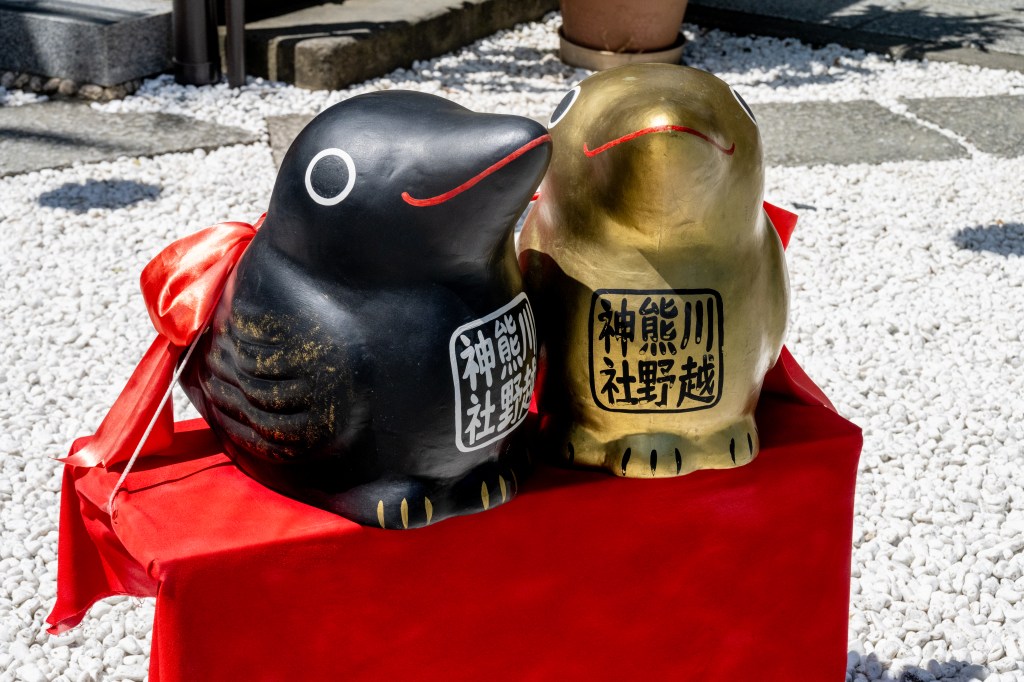
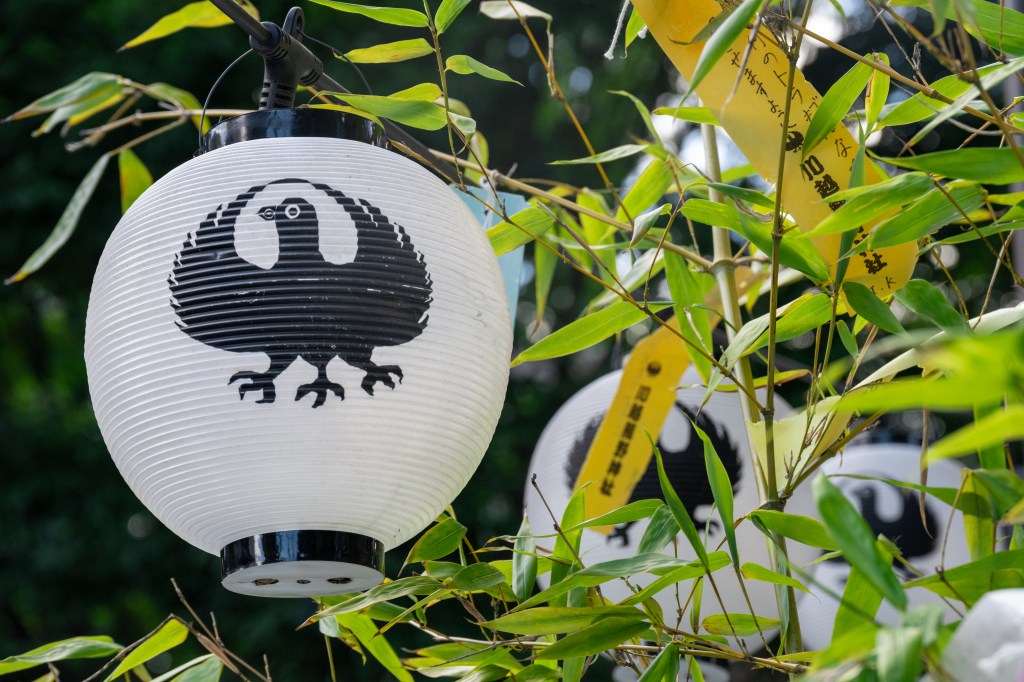
The giant, and smaller, pair of gold and black crows were such a treat! They had the cutest derpy smiles and enormous unblinking eyes! I knew about the typical depiction of the yatagarasu, I really should have expected these cute version after being to Japan so many times. The shrine itself was very small, I guess competing for space hundreds of years ago in a bustling trade town. We spent some time looking at the offering and got ourselves some small versions of the two crows to bring home with us. The shrine was still decorated for tanabata, the star festival which occurs in early July, so we got to see the adorned bamboo along with lamps with the yatagarasu symbol.
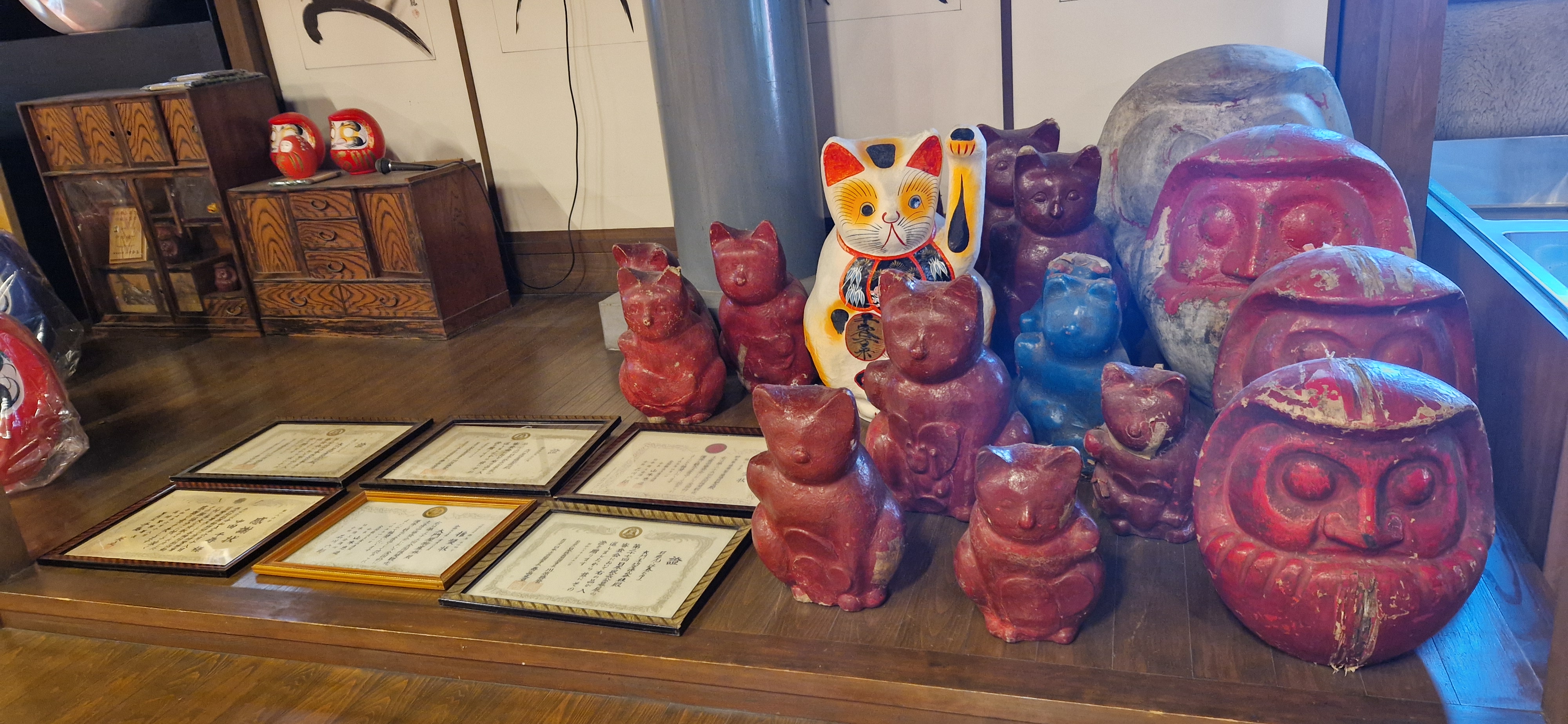
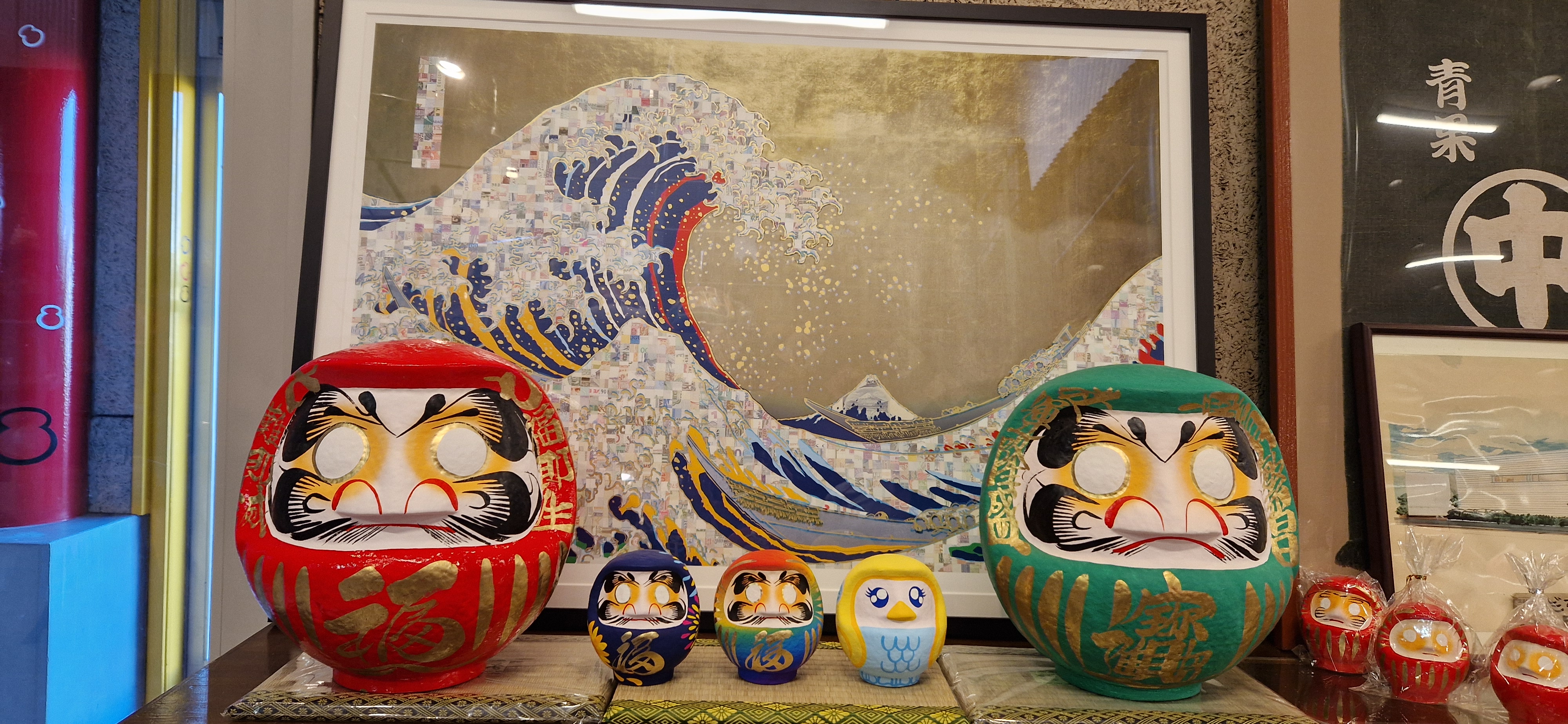
We had another destination in mind for the day, revisiting the city of Takasaki and their daruma artisan. We had visited in February 2023, seeing the shrine and going to an artisan shop famous for their seasonally decorated daruma, so worth a second visit. Last time we visited I felt like we were intruding, the staff were polite but remote, this time was completely different. The member of staff that greeted us was so happy that I could speak Japanese and she shared everything about the business, about the history or daruma making, and also about our time in Japan. We selected three beautifully decorated daruma and the member of staff helped us select the kanji for the calligrapher to put on the back. All in all I couldn’t recommend visiting Daimonya (だるまのふるさと大門屋).
We were coming to the end of our day and needed to head out of Gunma and back to Saitama for our accommodation for the night. It was quite busy heading towards Tokyo on a Sunday night, lesson learned for when the expressways get congested. We reached our accommodation, a “deluxe” container ship box, equipped with kitchen. Except it wasn’t so much equipped as there was one, with no pans, cutlery, crockery, or cooking implements. We popped to the supermarket next door, got a cooking knife and peeler, and tried our best to make something with what little there was. Soon it was time to get an early night for our first hike of the trip: Tanigawadake.
 My Nihon