
It was an absolutely sweltering morning in Kanazawa, even though we were packed and out of the house by 7am, the humidity was intense. Our plan for the day was to get to our rental house in Kawaguchiko, some 200 miles away, with plenty of stops along the way. We couldn’t leave Kanazawa without visitng one of the three best gardens in Japan, Kenroku-en. The garden opens very early, which is great for us as early risers, and for surviving the heat. We were able to park just outside of the garden and walk in .
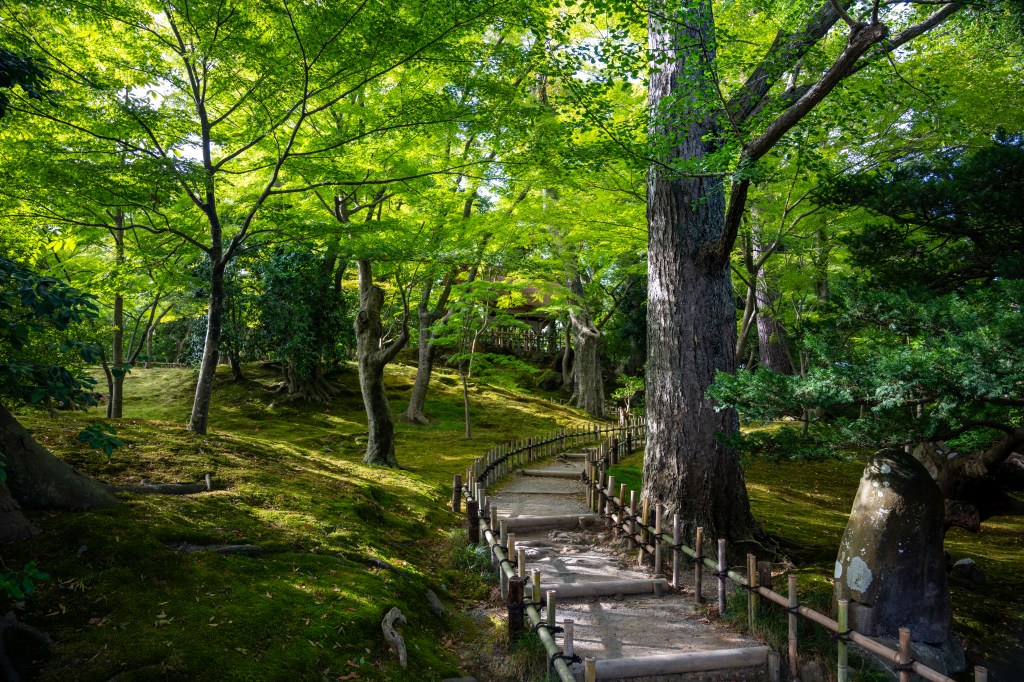
I cannot acurately describe how beautiful the garden is, it truly does have the six essential attributes to make a perfect garden (according to Chinese landscape theory). The garden is next to the site of the castle, and was designed and developed for over 200 years. The garden has something for every season, plum and sakura in spring, verdant green in summer, red leaves in autumn, and snow in winter. I really enjoyed the summer greens, and especially the tranquil ponds.

As we were early the garden was very quiet, whic added to the enjoyment, we were able to take our time meandering around. Sadly, we were too early to enjoy any kakigoori (shaved ice), which would have helped in the heat. We spent over an hour in the garden, and then walked to the entry to the castle. Sadly, the castle was destroyed, but the gate has stood the test of time. We had a quick look at the gate, and then got back to the aircon in the car and started our long journey south.
After visitng Shirakawago in February, I wanted to visit the other gassho-zukuri, and luckily the route south would take us right past them. Our first stop on our gassho tour was Ainokura village, the largest, and most remote, of the farnhouse villages in Gokayama.
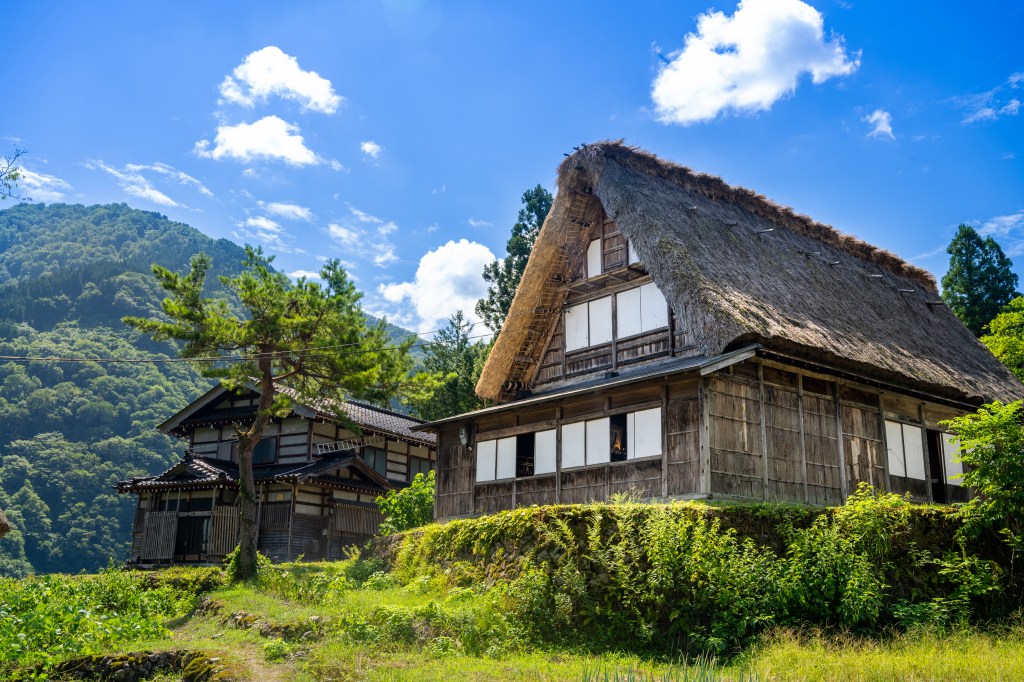
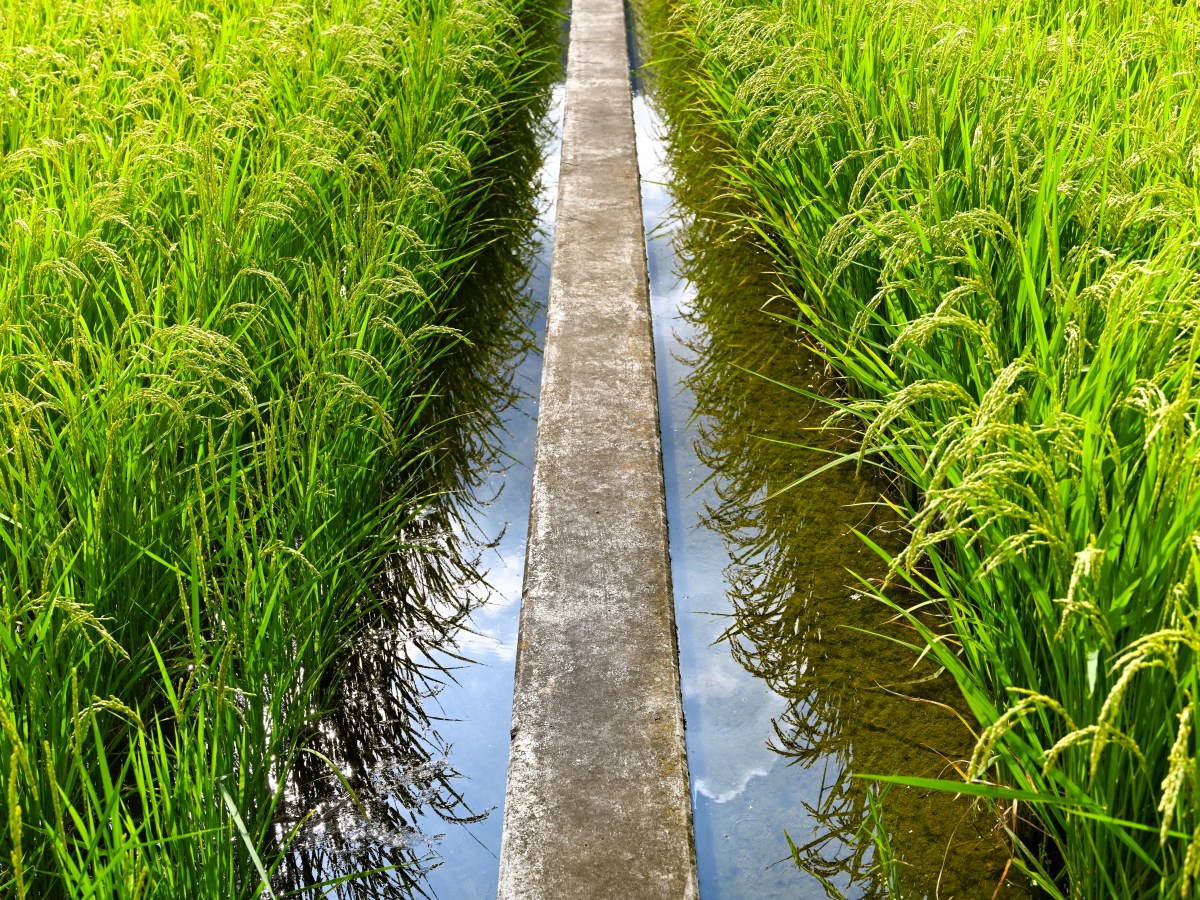
After being somewhat disappointed after visiting Shirakawago, I was surprised at how enjoyable it was to visit Ainokura. It is much smaller than Shirakawago, but being so remote meant that it has kept more of the culture, and it feels more like a living museum than a tourist hub. There are 20 houses in all, with a shop/restaurant and museum, the most enjoyable aspect was seeing the fields of crops, especially the golden rice.
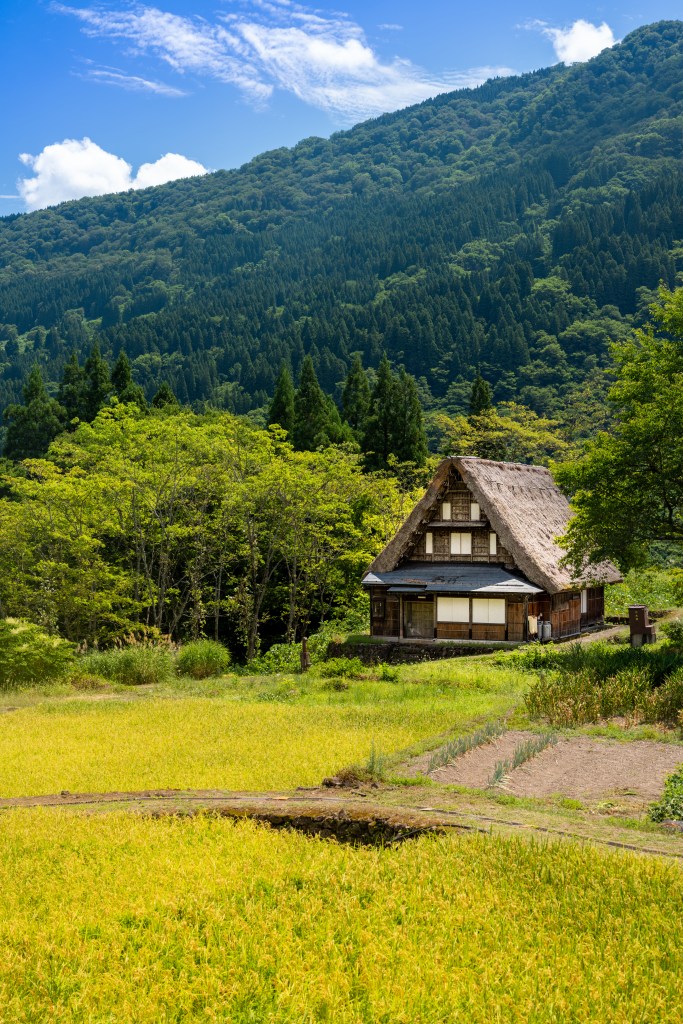
From Ainokura a 20 minute drive brings you to the interest Suganuma village. This place is different from both Shirakawago and Ainokura in that the place is split in two, on one side the Suganuma village and the other Gokayama Gashho no Sato – a village of relocated buildings often used for school trips. To get to the houses you need to go down in a lift, and then you emerge underground and can either walk right or left to get to one or the other of the two areas.

The original village was beautiful, with a number of maintained homes, rice fields, and a beautiful clear water. There are a number of shops, and again, there were few people there which made it really enjoyable. The Gokayama Gashho no Sato side was a bit underwhelming, although it was interesting to see the different styles of buildings, it was very empty and didn’t have the feel of a village.
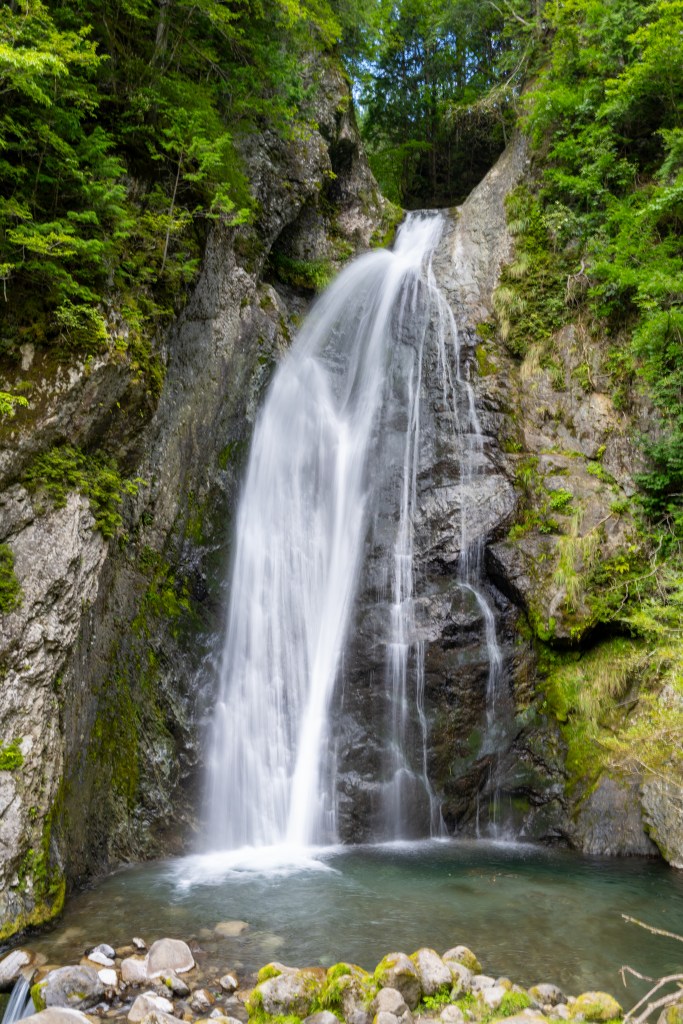
We were back on the road by 12 and had a long stretch of drive left (over 4.5 hours!) and so got started. We drove past a number of great spots, such as Takayama, Shirakawago and Matsumoto, which we had visited in February. Even though we had driven on this road many times in both February and earlier this week, I spotted a sign by the roadside which pointed up the mountain off of the main road for a waterfall. Without telling my husband I took us off of the road, and found ourselves on a rough road with a steep incline. My head was full of doubts and we kept going further and further up the mountain before coming to a small car park. There were quite a few cars there, which was a surprise, as there was just the single sign letting people know it was there. The waterfall was a short hike from the car park, and this is where we almost died!
I know it sounds a bit dramatic, but it was pretty scary!!! The short hike up to the waterfall had tall cliffs on one side, as we were walking past I heard a huge noise in coming from the cliff. My first thought was a bear or boar were charging at us, and when I looked up the cliff I saw something barreling through the undergrowth, and when it flipped up I saw enormous rocks. It was a rockfall! I jumped and pushed my husband back, and the huge rocks hit the other side of the path where we had been seconds before. I couldn’t believe it, we have been to so many spots with rock fall warnings, and it had never happened before. A bit shaken, we headed back to the car and got back on the road.
We finally got in to Kawaguchiko at around 6:30pm, it had been a long day since we left our last accommodation at 7am. We quickly popped to Ogino (our favourite supermarket) and then checked in to our amazing house for the week. The home was beautiful, two bedrooms with a LDK (living dining kitchen) and balcony overlooking Mount Fuji. It was a cloudy night, so no Mount Fuji, but we were surrounded by farmland, so the night was loud with the croak of frogs in the rice paddies.


 My Nihon